

The ultimate guide to
Back Pain Relief
Get back to feeling normal. This comprehensive guide will help you understand what your back pain means, pinpoint where it comes from, and explore the benefits of different treatment options.

1 Back pain causes—and, what you can do
Back pain is your body’s way of telling you to slow down and notice that something is wrong. In most cases, back pain is due to a sprain or strain.
Take back pain seriously
It is important that you pay attention to back pain. When left untreated, back injuries tend to compound, causing other injuries. Sprains lead to strains. Strains lead to sprains. Signs that you might have a back injury:
- Constant aching pain
- Muscle spasms
- Weakness
- Limited range of motion
- Headaches
- Numbness in your legs or feet
- Shooting pain down your leg
- Increased pain due to lack of movement
- Bowel and/or bladder changes
Tips for managing back pain symptoms
Has back pain caused you to miss work? You’re not alone. The number of people suffering with back pain is on the rise. In fact, researchers at the Centers for Disease Control and Prevention cite low back pain as the second leading cause of disability in the United States, and the latest numbers indicate that an estimated 31 million Americans are experiencing low-back pain at any time, according to the American Chiropractic Association.
Recovery starts when you seek help and figure out what’s wrong. Meet with a back doctor to start a personalized treatment plan to help you get back to living pain free.
In some cases, non-surgical strategies can help reduce back pain, including: several non-surgical strategies that can help reduce back pain symptoms.
- Avoid any activities that trigger your back pain.
- Take over-the-counter medication, such as Aleve or Advil, as needed. If you’re using the medication to mask your pain, you might continue to damage your back. Talk to a doctor for guidance if you’re unsure.
- Use a heating pad/cold pack (or alternate between the two).
- Get a massage. Massage therapy reduces muscle stiffness and increases blood flow.
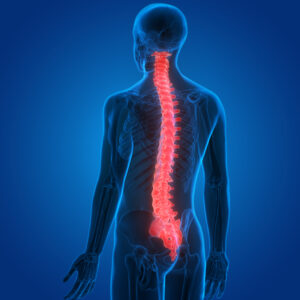
- Strain: When your muscle has been stretched too far and tears
- Sprain: When your ligaments are damaged through movement
- Herniated disk: When the cushion between vertebrae ruptures and irritates your nerves
- Spinal stenosis: When the space within your spine narrows and puts pressure on your nerves
2 Non-surgical and surgical treatment options
Reducing most back pain symptoms doesn’t require surgery. You can use nonsurgical means and experience successful results. Sometimes, identifying and stopping any activity that is causing your back pain for a few weeks is enough to alleviate minor back pain problems.
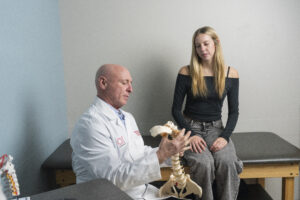
Physicians who specialize in non-operative spine care use medication, physical therapy and interventional procedures to help reduce pain and get back to your normal routine. If back surgery is needed, pain management spine physicians can assist with back pain treatment options during the interim.
In most cases, surgery is considered only when you’ve gone through all the non-operative treatment options, and you haven’t had significant or lasting improvement. Deciding on surgery often has to do with pain levels, the amount of disability, the length of time you’ve been in pain and what treatments you’ve already tried.
Elective back surgery is always your choice. But some back pain problems will only get better with surgery. Your back doctor will work with you to make sure you make an informed and educated decision.
“If we can look a patient in the eye and say that this surgery is the only way to lead a pain-free life, then that is the conversation we want to have,” shares OrthoIndy spine surgeon, Dr. Greg Poulter. “We want to replace fear and lack of understanding with a clear communication about treatment goals and a plan for getting better.”
Spine surgery is recommended to treat the following conditions:
- Nerve or spinal cord compression: When your spinal cord or nerves are compressed, it can cause pain, numbness, tingling, weakness, loss of coordination or balance, and even trouble with bowel and/or bladder function.
- Instability: Lower back instability often results from fractures or the degeneration or aging of your spine. Your spine surgeon may have to make your spine unstable to relieve pressure on the nerves.
- Spine deformities: When your spine loses its normal shape, the result may be scoliosis or kyphosis. Surgery is often used to restore the alignment of the spine.
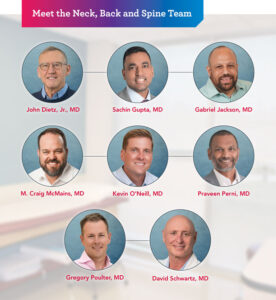
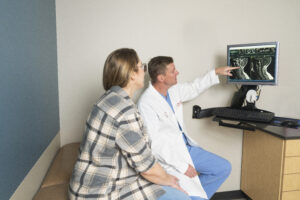
“Non-operative spine physicians work very closely with the spine surgeons in the same clinic. It is not uncommon for them to walk down the hall with an X-ray, knock on the door and have an immediate discussion about treatment options.” – Dr. Kevin O’Neill, OrthoIndy Spine Surgeon
3 It's never been a better time for spine surgery
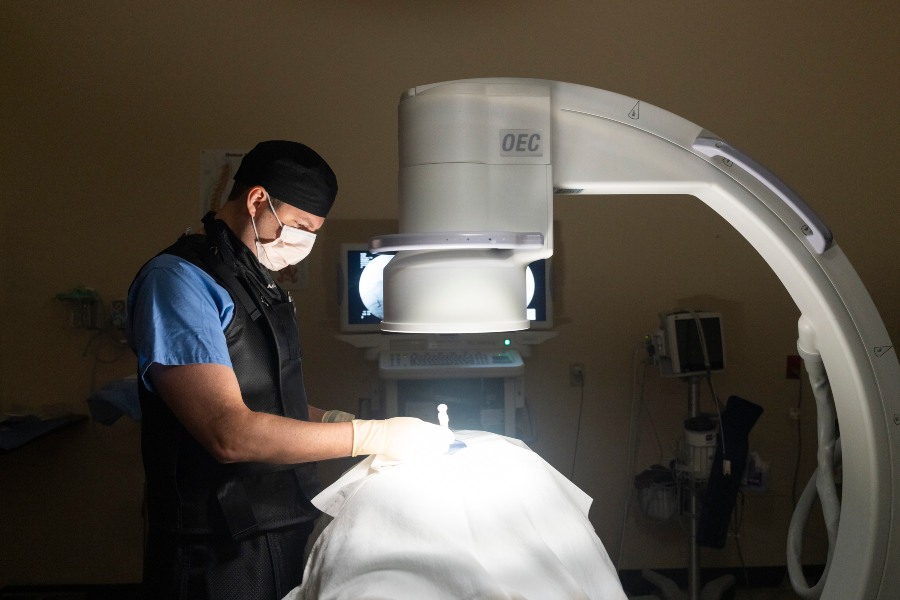
Innovation is transforming spine surgery, offering patients safer, less invasive options with faster recovery times. At OrthoIndy, our spine specialists continually adopt the latest techniques to improve outcomes.
Endoscopic surgery
One of the most significant advancements is endoscopic spine surgery, which has expanded beyond lumbar disc herniations to include spinal fusions and cervical and thoracic procedures. “Endoscopy has been a game-changer,” says OrthoIndy spine surgeon Dr. Craig McMains.
“We’re no longer limited to lumbar disc herniations—now, we can use endoscopic spine surgery for spinal fusions and even cervical and thoracic pathology.”
Endoscopic spine surgery has evolved and now offers several advantages:
- Less invasive approach with reduced soft tissue damage
- Decreased blood loss and shorter hospital stays
- Earlier functional recovery for patients
- Expanded applications beyond lumbar discectomy to include cervical and thoracic procedures
With its ability to minimize soft tissue damage, reduce blood loss and accelerate recovery, endoscopic spine surgery is revolutionizing the treatment of degenerative spine conditions, spinal stenosis and even some trauma and tumor cases.
Robotics surgery
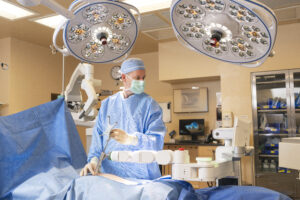
Advancements in robotic-assisted surgery are transforming spine care, allowing for greater precision, improved safety and faster recovery times. At OrthoIndy, our surgeons use the Mazor™ X Robotic Guidance System, a state-of-the-art technology that enhances surgical planning and execution.
“Robotic guidance allows us to plan with millimeter-level accuracy and execute that plan with unmatched precision,” says OrthoIndy spine surgeon Dr. Greg Poulter. “This leads to more consistent outcomes and less trauma to surrounding tissues.” The Mazor system is particularly beneficial for minimally invasive procedures, reducing blood loss, shortening hospital stays, and improving post-operative recovery. Whether for spinal fusions, complex deformities or degenerative conditions, robotic-assisted spine surgery is helping patients return to pain-free living with better long-term results.
Spinal fusion implants
OrthoIndy is at the forefront of spine surgery innovation, becoming the first in the world to treat a patient with OsteoAdapt SP, a next-generation spinal fusion implant.
After leading the way in the OASIS clinical trial using a technique called transforaminal interbody fusion (TLIF), OrthoIndy has now successfully performed the first surgery with this implant using the anterior lumbar interbody fusion (ALIF) approach. “This patient experienced noticeably less pain upon leaving the hospital than when he arrived,” says OrthoIndy spine surgeon Dr. McMains. “Innovations like this are changing the future of spine care, helping patients recover faster and get back to living their lives.”
Ultra-low radiation imaging
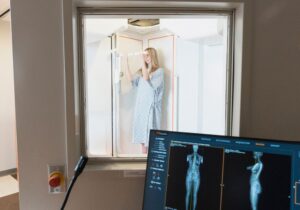
OrthoIndy is the first healthcare system in Indiana to offer EOS Edge X-ray imaging for our pediatric and adult patients. EOS Edge imaging minimizes the amount of radiation used to create high-quality, accurate images, emitting 50% to 85% less radiation than traditional X-rays. The EOS Micro Dose also allows for a 98% reduction in radiation exposure. Each scan for an adult takes less than 15 seconds, and only five seconds for children.
And, EOS technology delivers 3D imaging and more precise measurements, giving the information our doctors need to select the best treatment options for you.
“Robotic guidance allows us to plan with millimeter-level accuracy and execute that plan with unmatched precision. This leads to more consistent outcomes and less trauma to surrounding tissues.” – Dr. Greg Poulter, OrthoIndy Spine Surgeon
4 What to expect after your back surgery
After surgery, you’ll be up and walking within the first 24 hours. During your hospital stay, you’ll see a physical therapist and will work on sitting up, rolling over in bed and getting out of bed to walk, stand and use a walker. Your physical therapist will also be one of the decision makers who helps assess when you’re ready to go home.
You may notice some swelling. This will diminish over the next two days. Your back doctor will have you use an intermittent pneumatic compression device or compression leggings, called TED hose. Both of these helps prevent blood clots while you are immobile.
How healthy habits can speed up your recovery
“When it comes to aiding recovery, I can’t overstate the importance of a good diet, exercise and not smoking,” says Dr. O’Neill. “When a patient is unfit, surgery can amplify problems and slow recovery.”
Proper nutrition can make recovery easier. Eating health-promoting foods with the right nutrients enhances your immune system which speeds up the healing process. When you eat foods rich in antioxidants and protein, your body’s muscles mend more quickly and you’re more likely to avoid problems with infection. During recovery, one of the best things you can do to prevent inflammation is to avoid eating sugary foods and instead choose complex carbohydrates, like whole grains, that are rich in fiber.
Becoming active before and after surgery provides advantages during your healing process. During recovery, your spine physician will have you move in very specific ways to strengthen your core muscles. You’ll even get specific instructions for turning in bed to avoid damage.
Stop smoking
Smokers have an increased risk of complications during and after surgery. Experts recommend trying to quit smoking four to six weeks before your surgery. And, don’t stop there. According to the American College of Surgeons, if you can resist lighting up a cigarette after your surgery, then you’ll lessen your potential for wound complications by 50%.